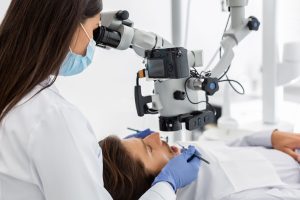
Highlighting the cutting-edge tools and technology used in modern endodontics, such as dental microscopes, digital imaging, and ultrasonic instruments, and how they enhance precision in complex cases.
How Technology Is Improving Success Rates in Endodontics
Endodontics, the branch of dentistry focused on saving teeth through treatments like root canals, has made significant advances in recent years. Thanks to cutting-edge tools and technology, endodontists can now perform procedures with greater precision, improving success rates even in complex cases. At Nuffield Dental, we use the latest innovations to ensure our patients receive the best care possible. Here’s how modern technology is transforming endodontics.
1. Dental Microscopes
One of the most important advancements in endodontics is the use of dental microscopes. These high-powered magnification tools allow endodontists to see the intricate details of a tooth’s internal structure. In complex cases, such as those involving narrow or curved canals, dental microscopes help locate and treat all areas of infection with greater accuracy. This level of precision reduces the chances of missing any canals, which is crucial for preventing reinfection.
2. Digital Imaging (CBCT Scans)
Traditional X-rays offer limited views of the tooth and surrounding tissue, but with Cone Beam Computed Tomography (CBCT), endodontists now have access to 3D images of the tooth and jaw. CBCT scans provide a more detailed and comprehensive view, helping to identify hidden canals, fractures, or infections that might not be visible on standard X-rays. This enhanced imaging capability leads to more accurate diagnoses and treatment plans, particularly in retreatments or surgical procedures.
3. Ultrasonic Instruments
Ultrasonic technology has revolutionised the way endodontists clean and shape root canals. Ultrasonic instruments use high-frequency vibrations to safely and efficiently remove debris, infection, and calcified tissue from within the canals. This technology is especially useful in cases where the canals are blocked or calcified, allowing the endodontist to access and clean even the most difficult areas.
4. Advanced Endodontic Files
Modern rotary endodontic files are made from nickel-titanium, a highly flexible material that allows the instruments to follow the natural curvature of the root canal without damaging the surrounding tooth structure. These files improve both the speed and precision of root canal treatments.
The Impact on Success Rates
With these technological advancements, endodontists can perform procedures more efficiently and with greater precision. This reduces the risk of complications and increases the likelihood of successful outcomes, even in the most challenging cases. By leveraging these tools, we can help patients preserve their natural teeth and avoid extractions.
If you’re in need of specialised endodontic care, contact Dr. Irene Sim at Nuffield Dental to learn more about how these advanced technologies can benefit your treatment.