As an endodontist, I specialize in managing complex root canal and pulp-related issues, often collaborating with general practitioners (GPs) to provide comprehensive care for patients. Recently, I treated my youngest patient yet—a 4-year-old child—who was referred by their GP for endodontic treatment. The child had developed early childhood caries (ECC), which had progressed to the point where one of the baby teeth required an endodontic procedure. Despite the young age of the patient, I was able to use a dental microscope to enhance precision during the treatment, which was performed under local anaesthesia (LA).
What Is Early Childhood Caries (ECC)?
Early childhood caries is a severe form of tooth decay that affects young children. In this case, the decay had reached the pulp of one of the child’s primary molars, requiring intervention to prevent infection and preserve the tooth. The child’s GP had performed initial examinations and restorative work on the less severely decayed teeth but referred the case to me for the endodontic management of the affected tooth.
My Role as the Endodontist
As the endodontist, my role was to treat the tooth’s pulp and ensure that the infection was contained. Given the complexity of the case, I used a dental microscope during the procedure, which allowed for greater visibility and precision. Here’s how I approached the treatment:
- Pulpotomy: The decayed tooth required a pulpotomy, a procedure where the infected pulp tissue from the crown of the tooth is carefully removed. The microscope was invaluable in this procedure, allowing me to accurately target the infected areas while preserving as much healthy pulp as possible. After cleaning the pulp chamber, I placed a medicated filling to prevent further infection and support the tooth’s natural development.
- Collaboration with the Referring GP: Following the endodontic procedure, I coordinated with the referring GP to complete the child’s treatment. The GP took care of the restorative work, including placing protective fillings and ensuring overall dental health.
Why Local Anaesthesia (LA) Was Used
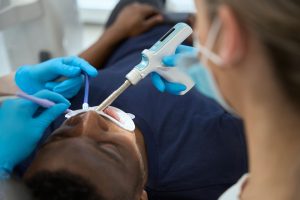
The entire procedure was conducted under local anaesthesia, which provided effective pain relief while keeping the child calm and comfortable. Local anaesthesia is ideal for such procedures in young children, as it avoids the risks associated with general anaesthesia while still providing a pain-free experience.
The Importance of Early Endodontic Intervention
Endodontic care for young children is crucial when tooth decay reaches the pulp. By performing a pulpotomy, we can save the tooth and prevent more severe problems like abscesses or damage to the underlying permanent teeth. The use of advanced tools, such as the dental microscope, combined with a collaborative approach between endodontists and GPs, ensures that children receive the best possible care.
If your child has been referred for endodontic treatment or is experiencing symptoms of tooth pain, don’t hesitate to schedule a consultation. At Nuffield Dental, we specialize in working with referring GPs to provide targeted, high-quality endodontic care for young patients, ensuring the best outcomes for their developing teeth.